MY Voice Canada
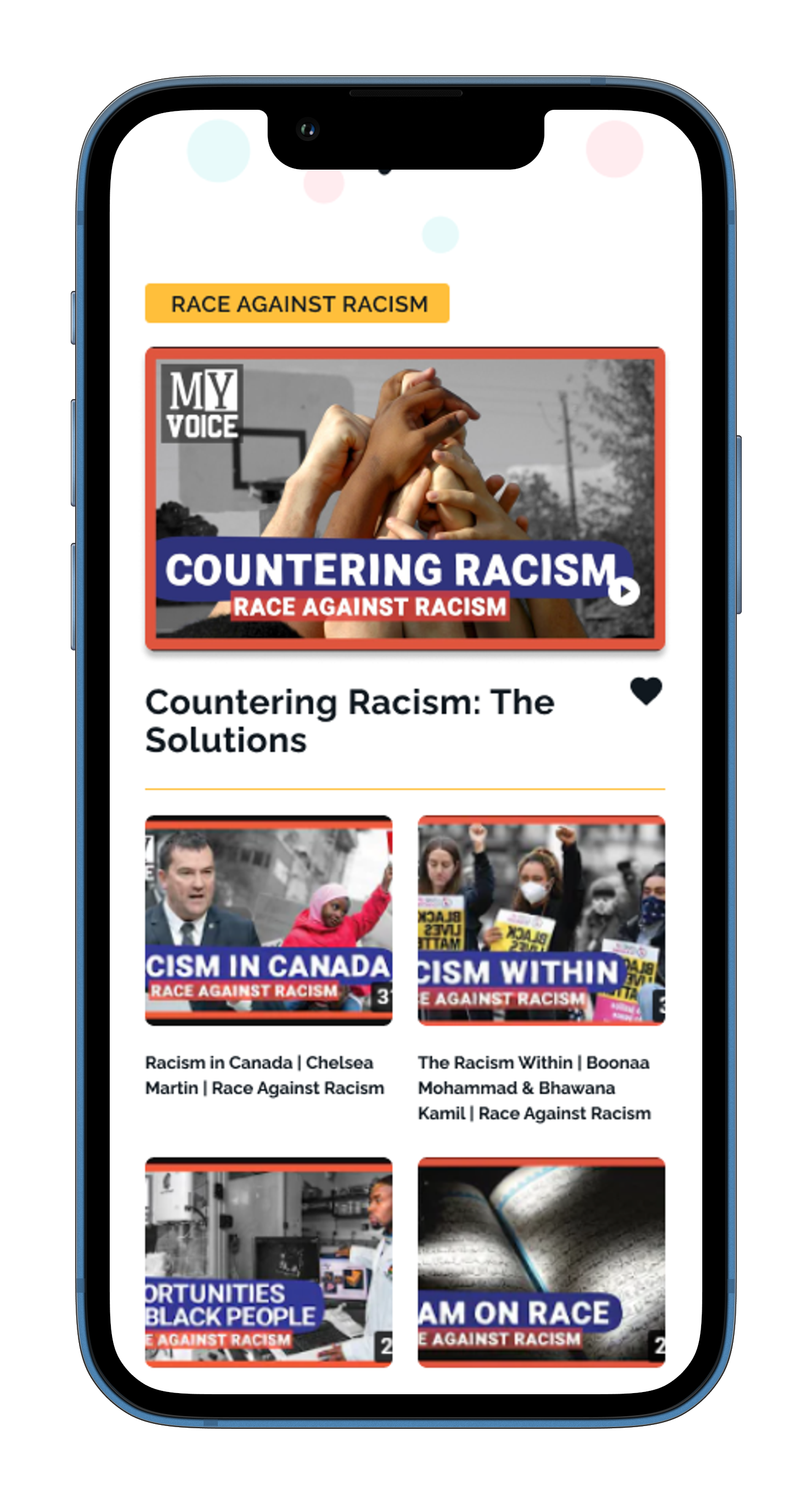
MY Voice Canada App Prototype Research
MY Voice Canada App Prototype Research
Context
The benefit of this project was to create a mobile platform for MY Voice Canada, a nonprofit organization that empowers to offer youth creative opportunities using positive media leading to more confident leaders.
The two main challenges include forming and training a remote design and development team during the pandemic, effectively setting up remote research, prototyping, and 18 rounds of A/B testing to deliver a high-fidelity prototype.
Takeaway learnt how to work with a remote team to ensure productivity, communication, finding ways for the team and I to stay consistently motivated to meet the expectations we had of working more remotely than in person.
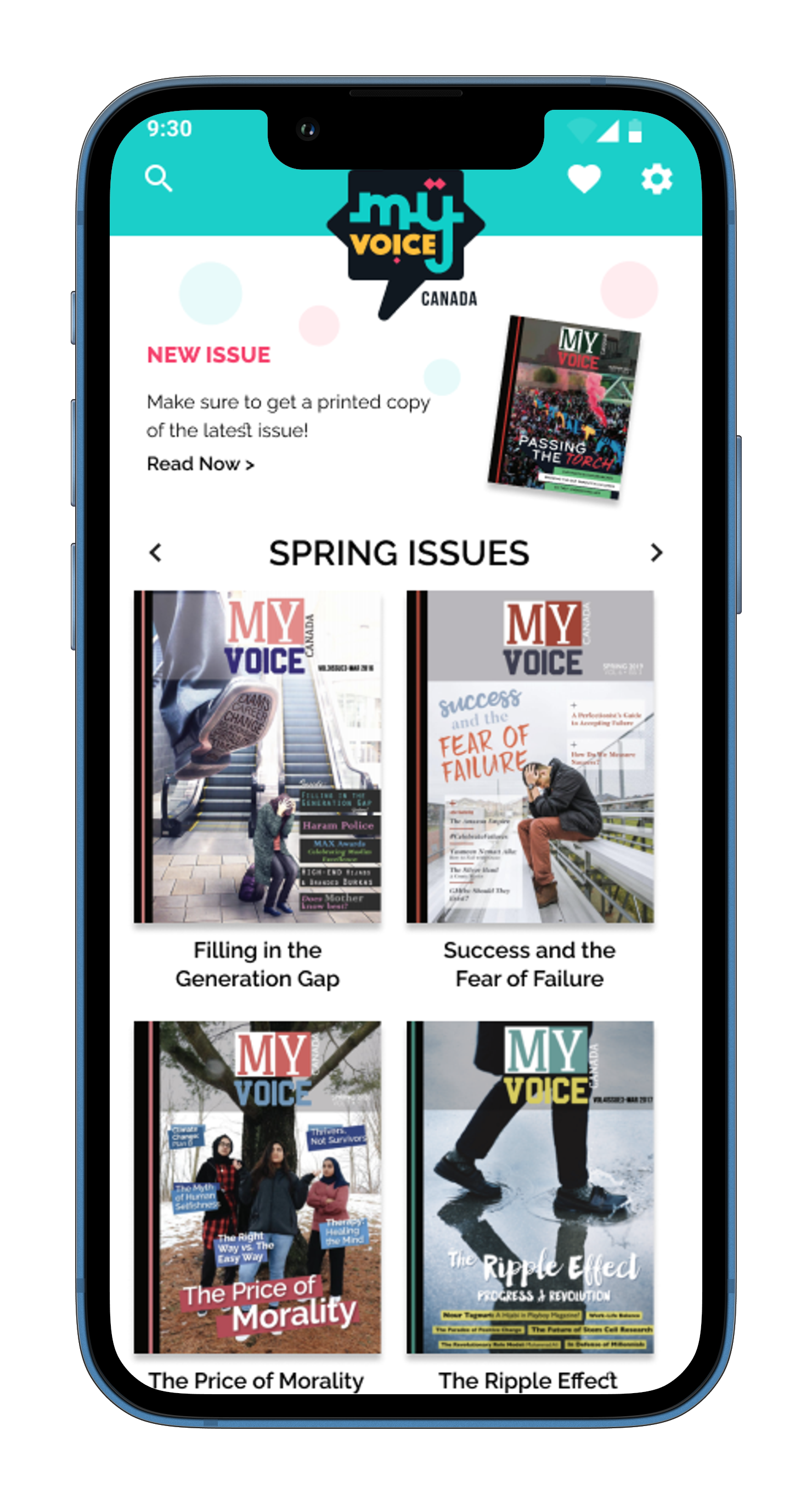
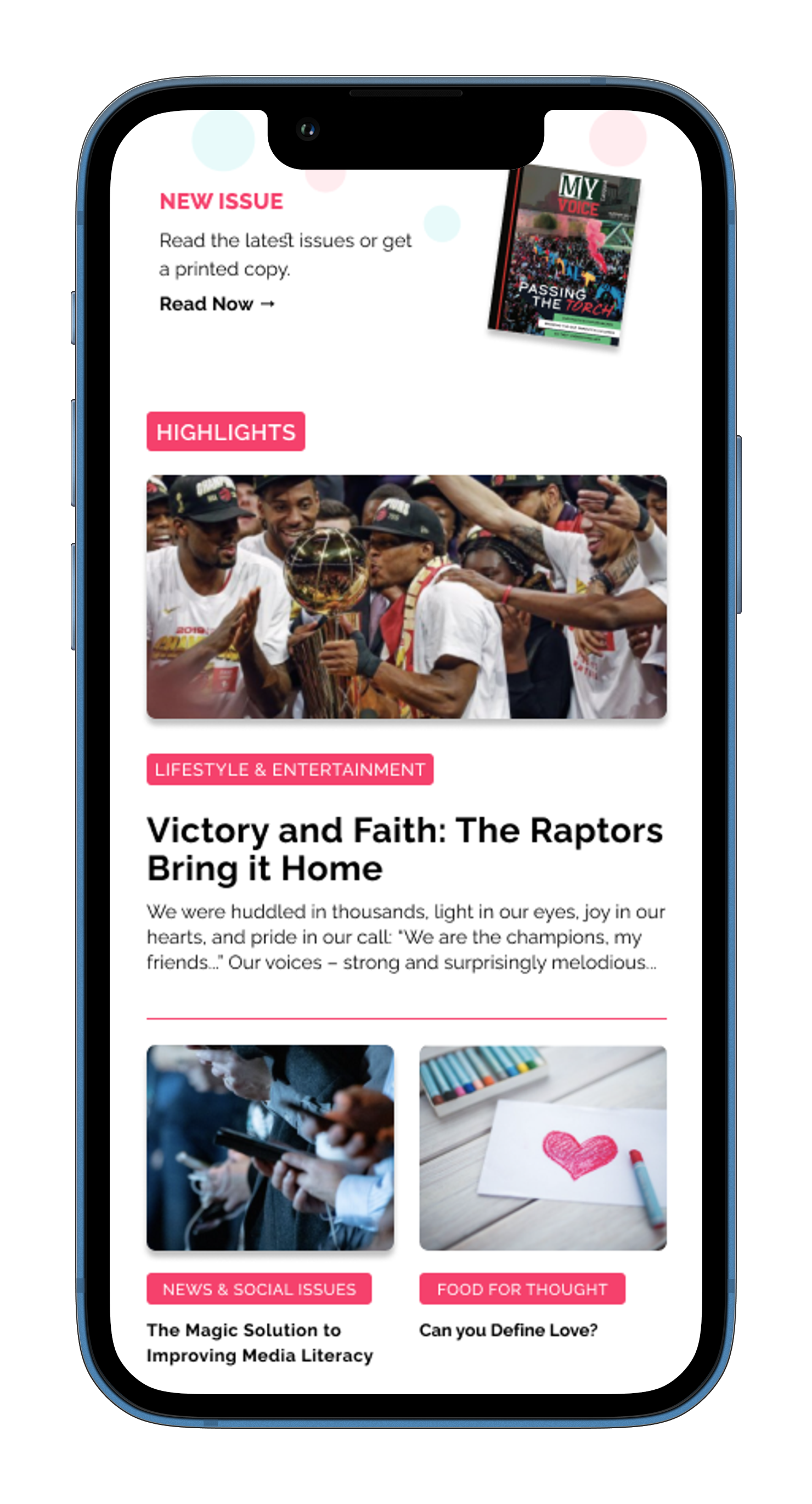
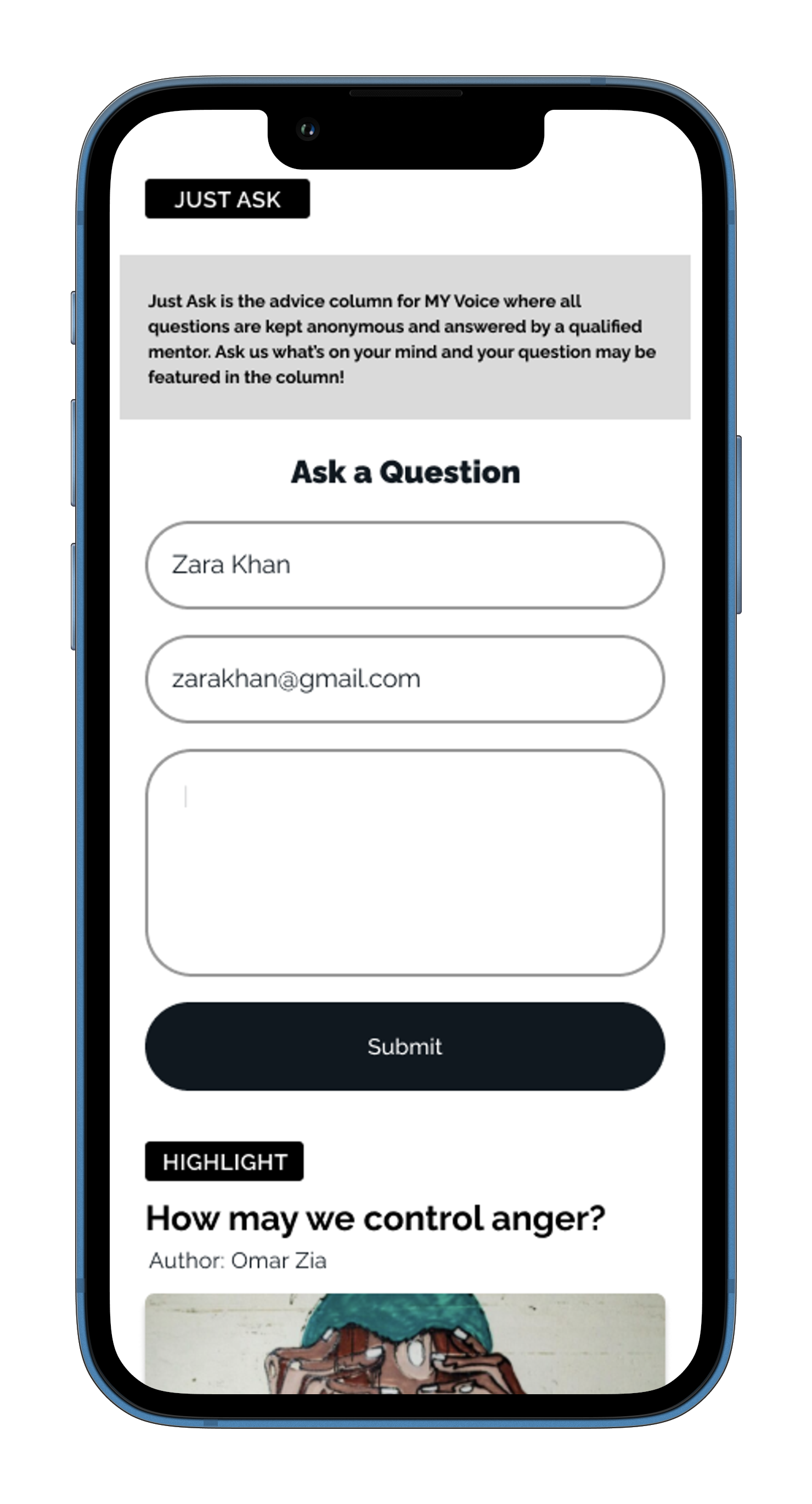
The solution a fully interactive prototype that translated MY Voice’s brand into a mobile experience, meant to enable youth engagement and set the foundation for future digital growth.
Research Takeaways
Conclusion
Users needs were different than what the team and I envisioned based off the organization’s goal and project mission gathered from the focus groups, character story survey, MY Voice survey, and 1:1 interviews.
I set the team up on Maze (prototyping tool) to test the prototypes but due to lack of time and the team’s familiarity with Zoom, we continued user testing on Zoom.
Understand, Research, and Analyze Phases we compiled all the content which led to the project’s direction and overall problem that should be reevaluated.
Understand
Scope out the problem and the organizations missions and purpose for wanting an application for youth.
Research
Research helped the team and I understand what would motivate users to want to use a digital application. Also, gave more clarity for the organization’s goals for the application.
Analyze
Analyzing the research led to reevaluation of the concept solutions created during design sprints which realigned user research and pushed the team to think outside the box and be more creative using the research as insight for the final concepts.
Team
*
Team *
My Role
Product Design Team Lead, User Experience Design, User Research & Interface, and Prototype & A/B User Testing.
Research, Write, Interface
2 user researchers, 3 Copy & Content Writers, and 3 User Interface Designers.
User Testers & Collaborators
5 User & Usability Testers, 1 Senior UX/UI Designer & Developer, and 1 Project Manager.
Market & Develop
Business & Marketing rep and Mobile App Developer.
Project Purpose
Led 6-month accumulative remote project to build an app designed for youth, to form the first design & tech team for MY Voice Canada. To understand the direction of the project I met with the stakeholders and questioned the target audience to explore the objective of creating an app and what users would look for.
18
38
5
2
Design Sprints
High-fidelity Prototypes
Total Focus Group, Survey & Interview Participants
A / B User Test Sessions
Market & Launch
Understand
Analyze
Develop
Understand
Used the product design development cycle separating the project into 6 phases. Implemented design thinking methods and systems to ensure remote productivity.
Analyze
Develop
Research
Design
Research
Design
Market & Launch
Oversaw recruiting, training, and team responsibilities for a 6 month remote project. Collaborated with cross-functional teams both internally and externally.
Research Phase
Empathy Maps were created by me from the 1:1 interview analysis, character story, and MY Voice survey responses the team and I put together.
Research gathered revealed a deeper insight on users at an empathic level which led to an understanding of how users enjoyed creative connections and sharing their personal thoughts without their privacy being compromised.
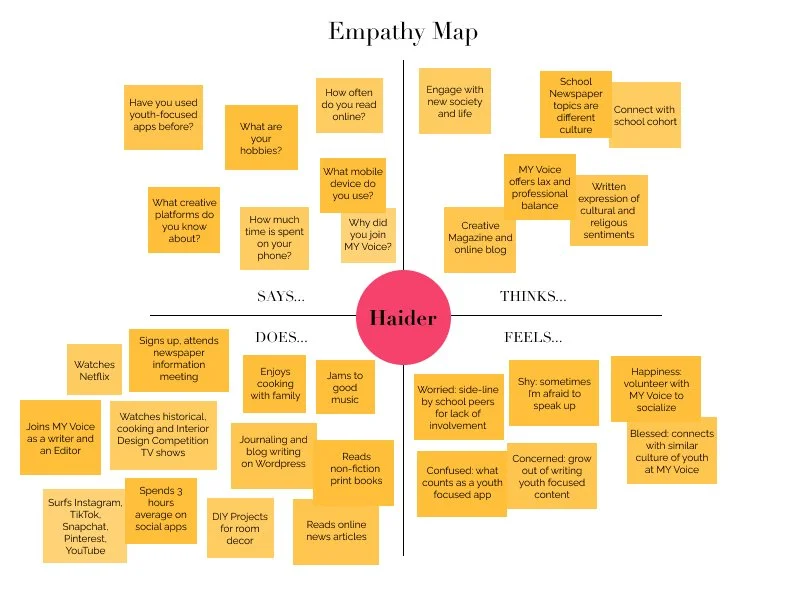
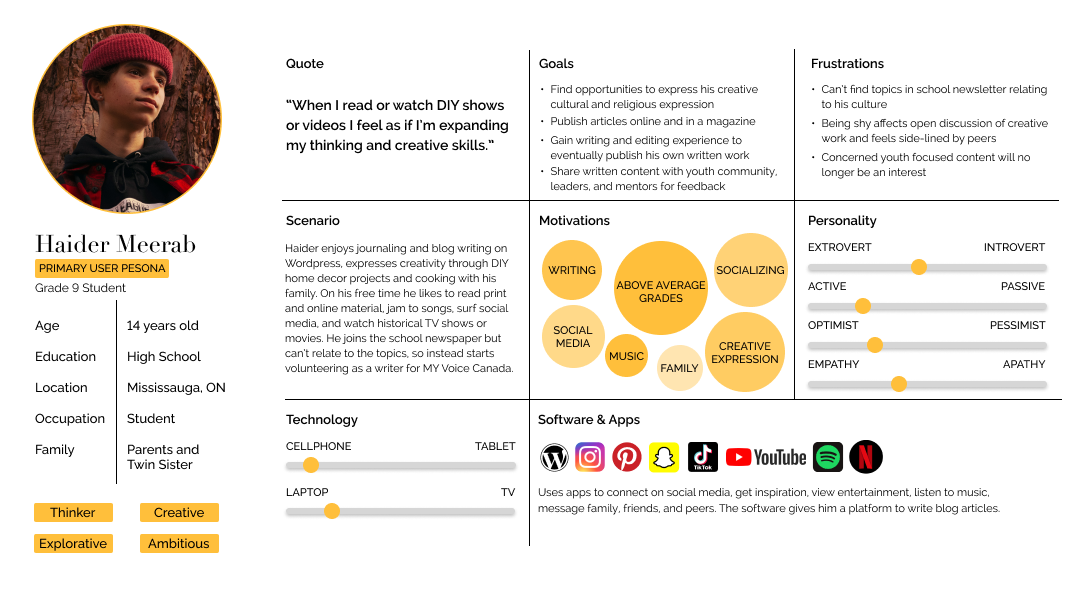
Haider is ambitious, creative, explorative, and a thinker.
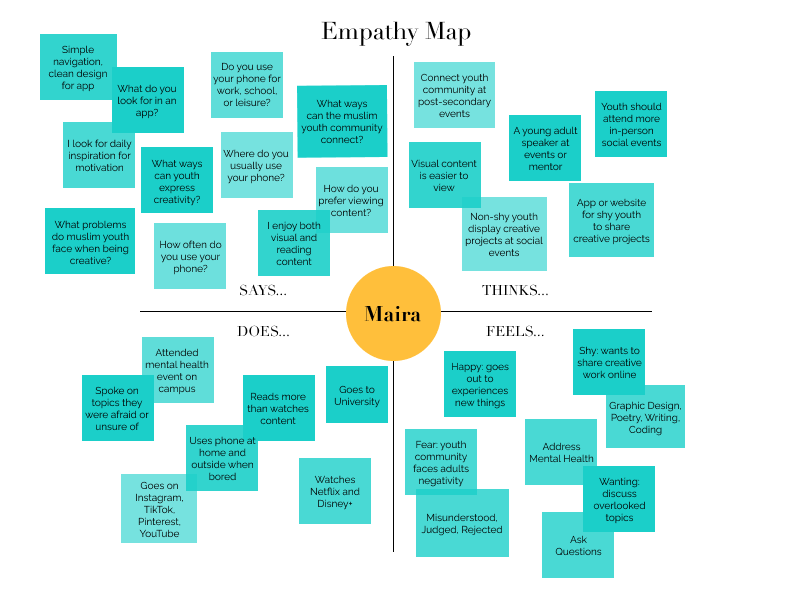
Maira is an artistic, motivated, observant, and passionate individual.
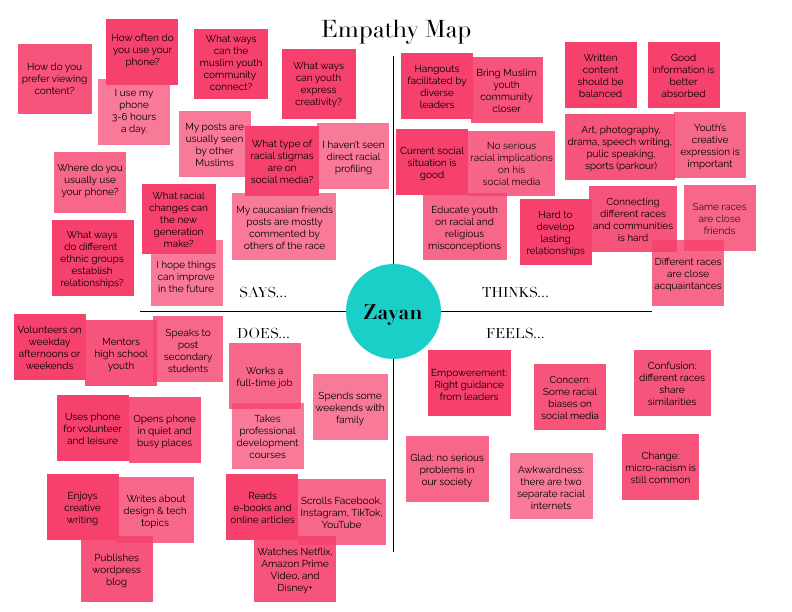
Zayan is an explorative, humorous, intellectual, and loyal individual.
Understand Phase
Phase 1: Understand exploration of the organization’s objective to pursue this project through focus group sessions, surveys, and interview findings helped converge the project goals and it connected the team by bringing everyone together.
Focus Groups
“...an opportunity to read news articles to read and engage with content on real events taking place both in the community and world…”

1:1 Interview with User
“…Having a social media page where a diversity of muslim youth can connect with people their age with similar interests...”
Focus groups narrowed the executives vision for the shared project goals and business objectives for launching an app. Patterns of similarity for the design and function was found after meeting with stakeholders.
MY Voice survey was completed to understand internal stakeholders lifestyle, interests, and purpose for joining MY Voice, giving a deeper insight their digital habits.
Character story survey showed feelings, situations, and thinking of youth by placing fictional characters in an environment that builds on real life experiences. Also, survey was sent to 9 executives interested in participating.
1:1 Interviews gave insight on how youth felt about social, community, religion, and creative topics and issues that centred around their lifestyle.
User Personas
Profiled general habitual patterns and interests of 3 different type of users needs to understand what purpose they would use the end product.
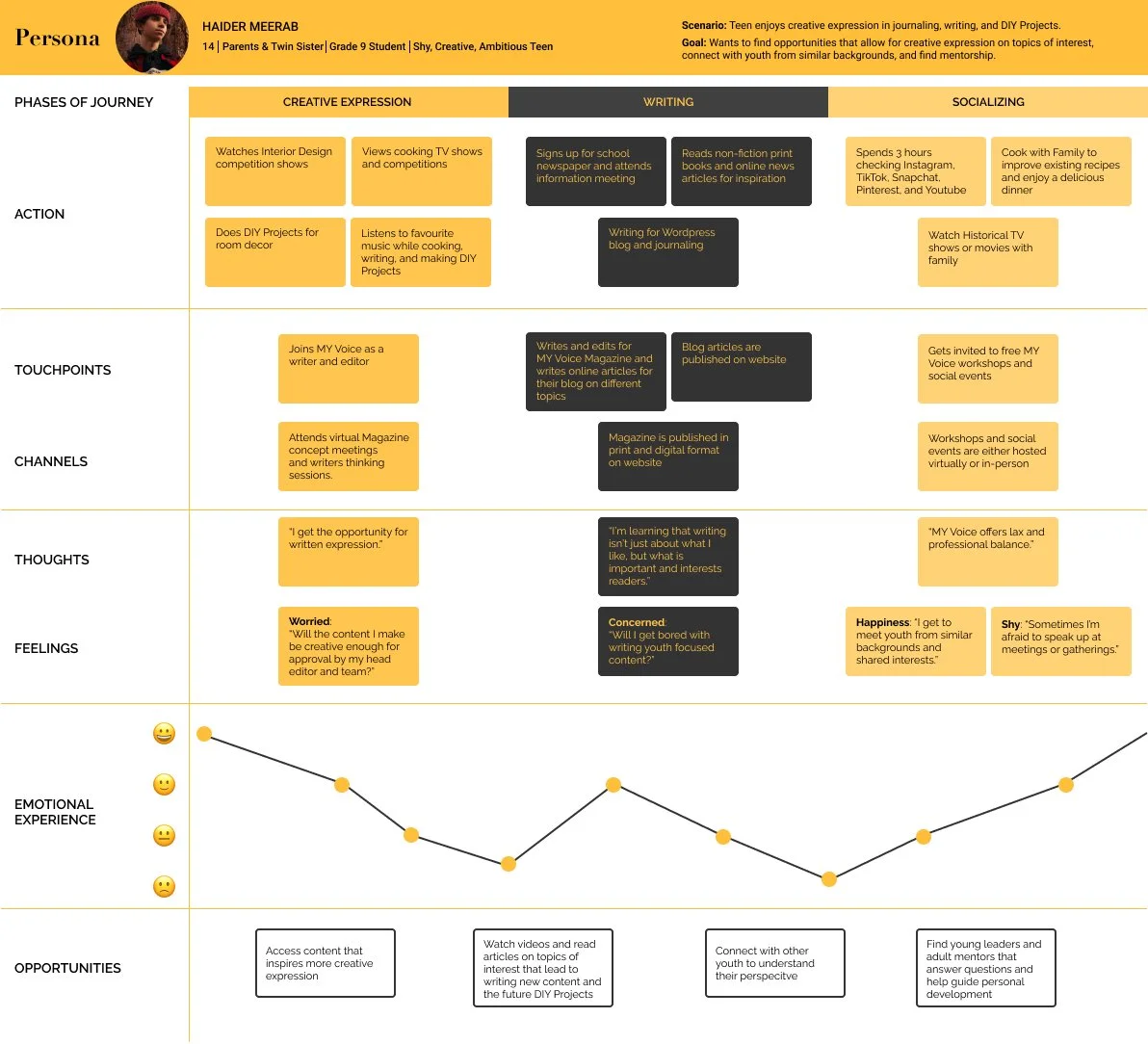
Haider Meerab: Creative Writer
Grade 9 Student, Primary User
Key Insights
He can’t find topics in the school newsletter relating to his culture and religion.
Haider is shy about participating in open discussions of creative work and he feels side lined by his peers.
Maira Rayan: Motivated Learner
University Student, Secondary User
Key Insights
Youth in Maira’s community ask questions or show creative expression which is overlooked by adults.
Lack of discussion on important topics, mental health, culture, religion, etc. in the youth community.
Zayan Sana: Explorative Intellect
Software Developer, Tertiary User
Key Insights
Zayan finds youth in different communities face similar problems in their personal and community life.
Due to lack of knowledge there is cultural, racial, and religious misconceptions among youth.
There is a need of diverse leaders to help establish positive relationships for the diversity of youth.
Research Phase Conclusions
What findings from testing prototype A & B will help achieve the desired outcome?
The findings are meant to decide how the youth are able to navigate the application to find the content they are looking for.What could be refined or omitted to help achieve those outcomes?
MY Voice reaching out to more youth in high schools, colleges, universities, and even recent graduates to help further build the organization and the applications content to help further expand their programs.Led the team in preparing user testing content and facilitated 8 of the 18 A/B User Test Sessions. The team hosted the remaining 10 facilitations.
A/B User Testing Observations
“Discovered that users were looking for an in app experience to connect with people, have their questions answered and posted up with their personal information being protected, and viewing reading and video content that addresses current topics and rising issues.”
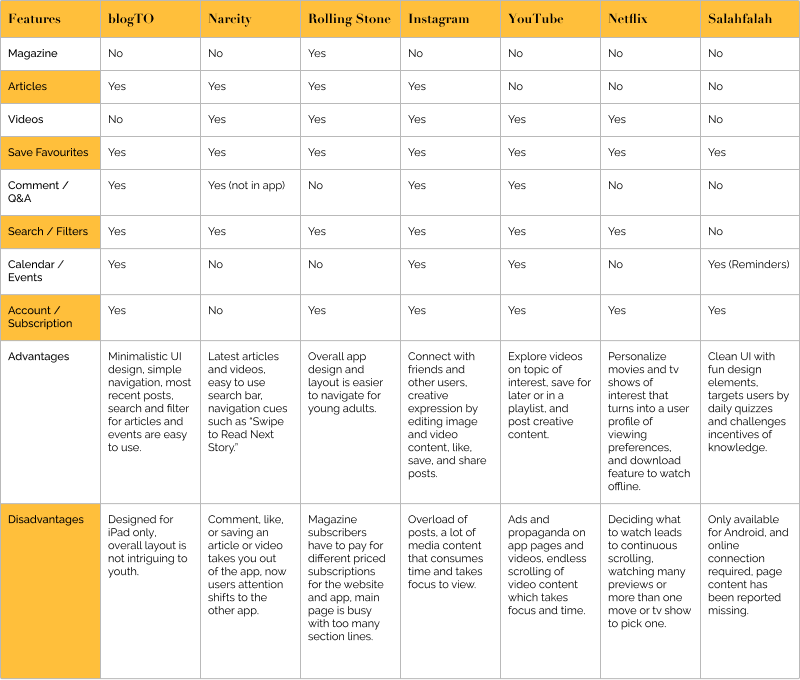
Competitors Analysis
Evaluating the competition I found features and the user interface design components that worked and didn’t work.
Heuristic evaluation was done using (SWOT):
Strength, Weaknesses, Opportunities, to address users needs.
Threats to find design and features that were lacking.
Helped when the team started analyzing and forming concepts.
A / B User Testing Insights
Facilitators team and I assigned task scenarios for both prototypes A and B to determine which concept was most enjoyed, the app design appeal and navigable feature functionality.
Pre-User Test Questions
Asked during introduction to help get to know users when they’re signing up.
Hobbies or interests focused on creativity, viewing and reading content.
28 participants read daily literature, religion, books, visuals, current news, or online content.
16 of 28 users search and post on blogging, vlogging, and reading platforms.
Post User Test Questions
Get further insights on users experience and thoughts of the overall app prototype.
Navigable content, search made easy, reading and viewing content, asking personal questions, and a more defined purpose to stand out to audience.
13 people said Yes and 1 said No to using the app. Majority read the magazine and blog articles, some explore the Just Ask features, and 3 users liked watching video content.
Task Scenarios Goals
Initial goal was to test concepts: Read, Watch, Question and Answer, and Register concepts.
Users were interested in reading articles and watching videos on their topics of interests.
Streaming videos and asking relevant questions was important to the app users.
In-Test Questions
Get further insight on users experience and thoughts of the overall app prototype.
Users were interested in reading articles and watching videos on their topics of interests.
Navigating the app was straightforward for the 18 users from the app testing sessions.
Analyze Phase
Research analysis to create the prototype which was done through the teams participation of design sprints.
Crazy 8’s & Dot Voting
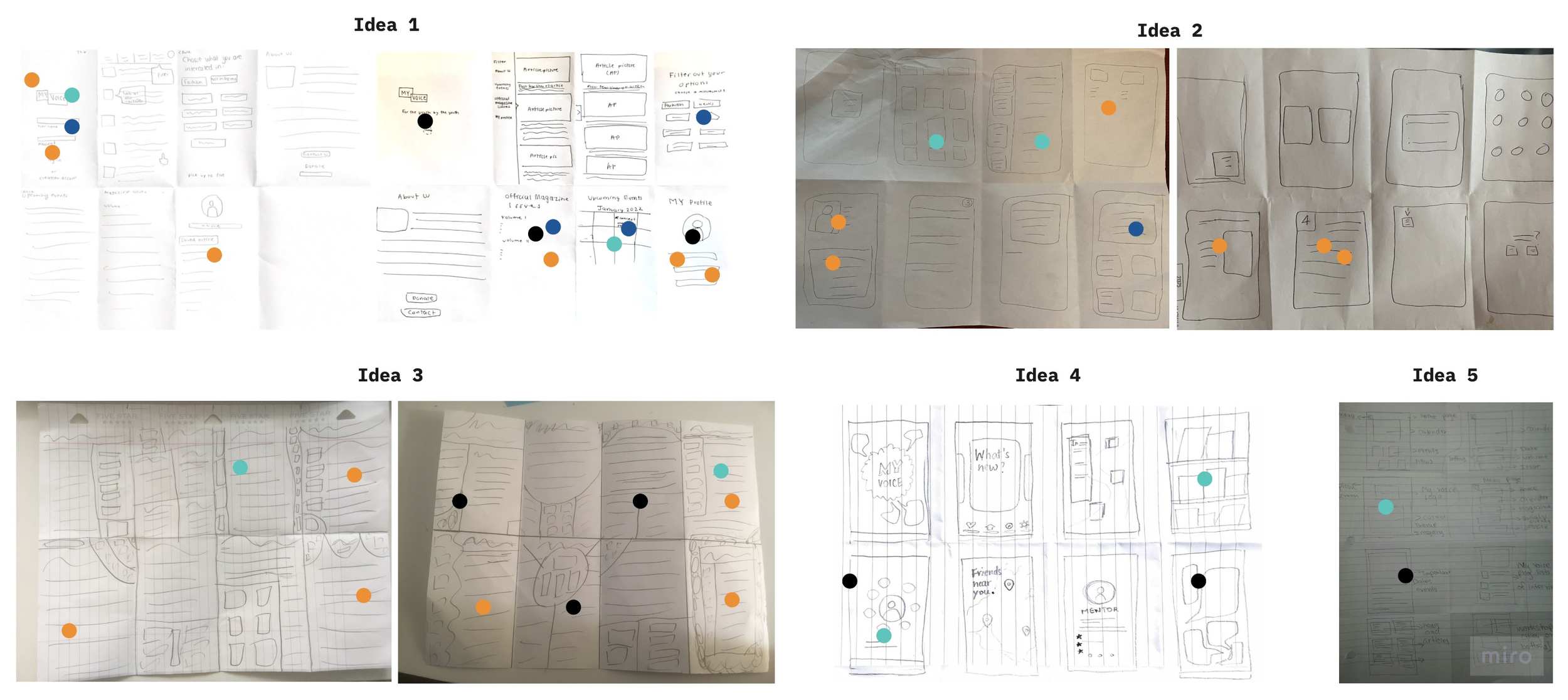
Hosted Crazy 8’s and Dot Voting sessions to get the team to think outside of the box in order to come up with creative ideas of app features for their top 3 choices.
Solution Sketching & Dot Voting
Led the Solution Sketch Design Sprint, where the team took their ideas further by sketching 3 detailed framed solutions of one concept each. The most compelling concept solutions were voted by the team.
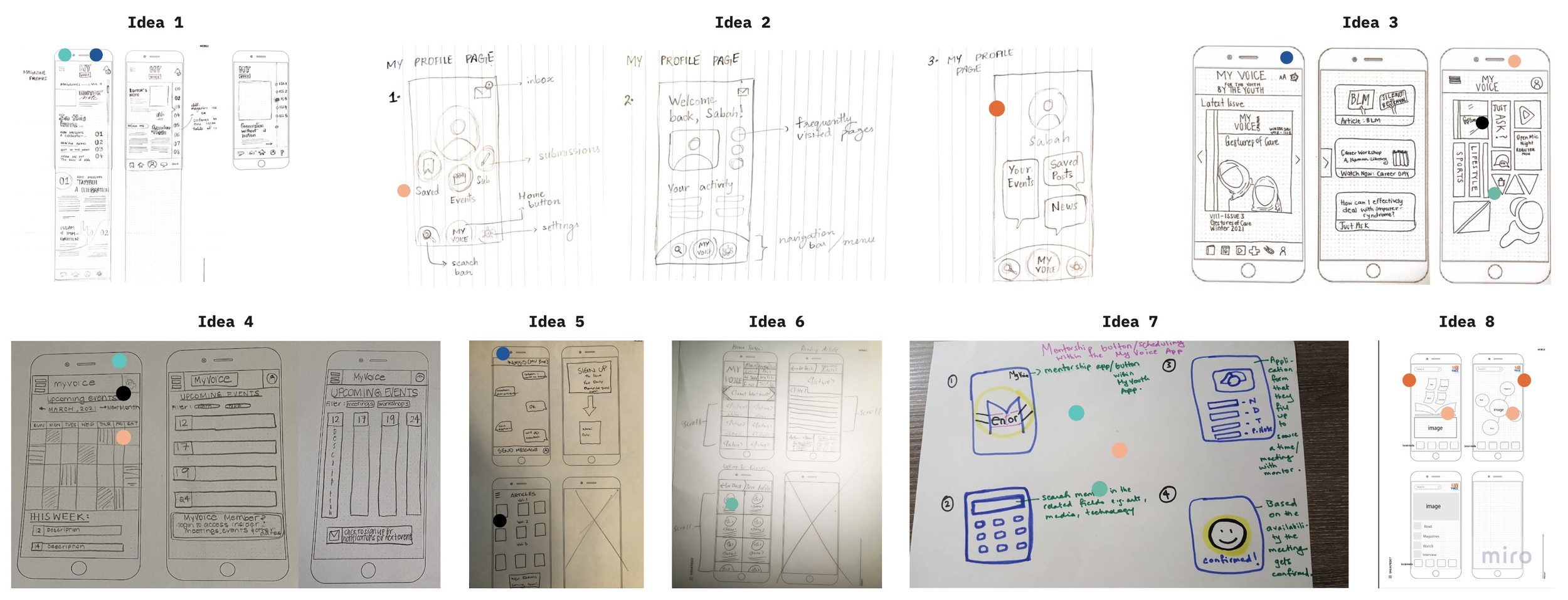
Design Sprint Analysis
A / B design prototype findings were gathered using Affinity Mapping and Card Sorting to better discern the results of all the users who completed the task scenarios for Read, Watch, Question & Answer Concepts during the facilitation sessions.

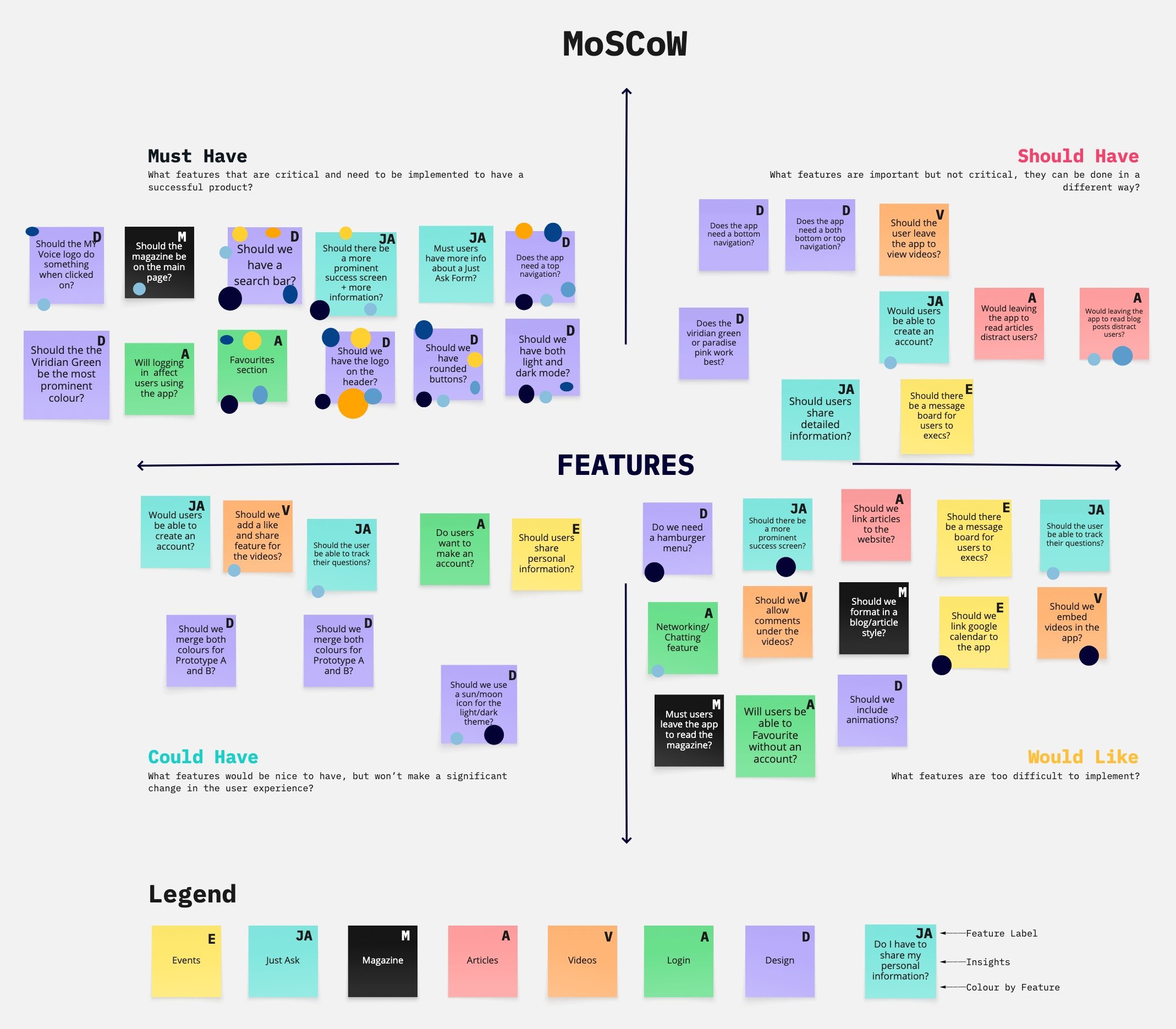
Used Must Have from MoSCow sprint to determine if the target user audience would benefit from selected features and sections.
Affinity Mapping & Card Sorting
Led the team to participate in Affinity Mapping and Card Sorting to help gather A/B User Test results by grouping them into two categories Versions A & B to complete the task scenarios for Read, Watch, Question & Answer concepts.

A / B Test Findings
3 mature users and 15 youth users observations revealed app’s focus to be more on sharing and viewing, and less on collecting information.
A / B User Testing revealed a wider youth and non-youth audience that was looking to connect with the MY Voice organization and other youth.

MoSCow Method
Led the team through the MoSCoW & Dot Voting method to determine the User Interface Design features users benefited from by A/B User Testing the design prototype. Sorted the observations of the Affinity Map Results.
User Journey Map
Mapped out Haider Meerab’s User Journey to get a better insight of the findings that would motivate this user to use the MY Voice App. His journey during the creative expression, writing, and socializing showing interactions with these key features.
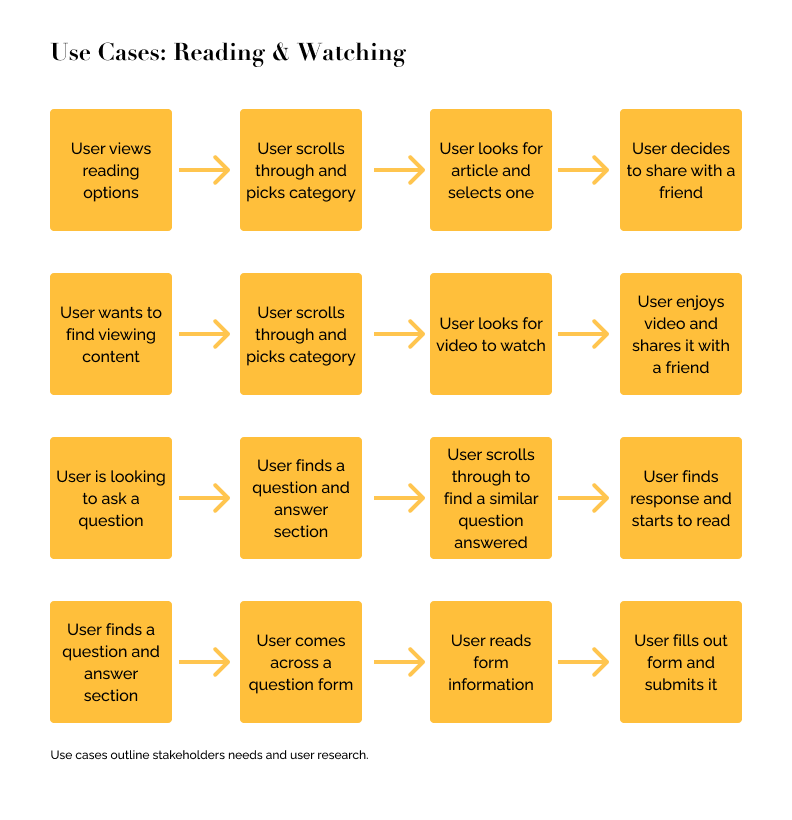
Use Case Model
User’s actions can be seen step by step in each row, when they decide what to do. They have to choose an option, pick a category, and select their next action of what they want to do. This narrative narrows the specific concept solutions, that reflect the stakeholders requirements and the user research.
User Matrix
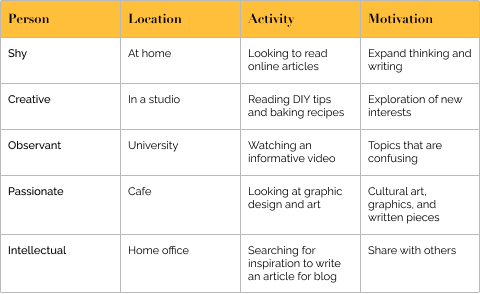
User Matrix focuses on different pathways users would take to the final concept solutions for the app prototype. The person’s personality, location from where they would use the app, the activity from the location on the app, and the motivation that drives the person to participate in that activity.